
Article: Five Days Before It's Even Coffee: The Story Behind Pomelo Brûlée
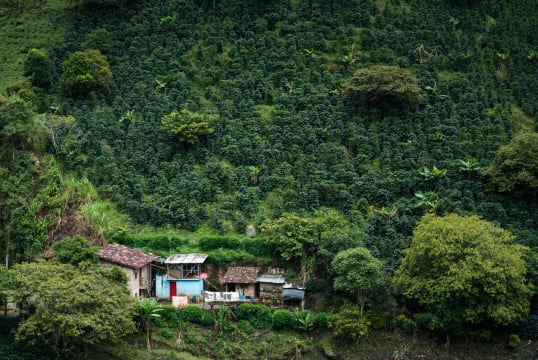
Five Days Before It's Even Coffee: The Story Behind Pomelo Brûlée
Anaerobic washed Caturra from Finca El Placer, San Agustin, Huila, Colombia
Most coffee is fermented for twelve to thirty six hours. The lot behind Pomelo Brûlée ferments for five days. This is the story of the farm, the producer, and the process that earns that kind of patience.
The Farm: Finca El Placer, San Agustin
At the southern end of Huila, in the town of San Agustin, Daniel Mauricio Bolaños Zuniga runs a five hectare farm called El Placer, and a second one nearby called La Esperanza. Both sit between 1,650 and 1,700 meters above sea level, part of the Asociacion los Naranjos. Coffee grows there alongside whatever else the land will carry.
That mix is the norm in Huila, not the exception. The region produces close to a fifth of all Colombian coffee, and four out of five of the people growing it work less than three hectares. Huila sits in the Magdalena Valley between the Central and Eastern ranges of the Andes, and the swings in elevation across the region make it one of the most varied coffee landscapes in the country.
The Process: Anaerobic Washed, the Slow Way
What Daniel does after the harvest is where this lot separates itself.
The cherries are floated first, in a tank of water, to clear out anything underripe or damaged. Then they rest whole, sealed away from the air, for two full days. Only after that are they pulped, and only then do they go back in for another three days of fermentation with a small amount of water. Washing comes next, and then twenty to twenty five days drying slowly on African raised beds or parabolic dryers.
Five days of fermentation before the coffee even begins to dry. Close to a month before it leaves the farm. That is a great deal of attention for a very small amount of coffee.
Anaerobic fermentation has a reputation for producing loud, boozy, sometimes chaotic cups. Done carefully, on a washed base like this one, it does something quieter: it deepens the sweetness and rounds the body without burying the character of the variety underneath.
The Variety: Caturra
Caturra is a natural dwarf mutation of Bourbon, first found in Brazil in the 1910s and selected for cultivation in the 1930s. It is a workhorse variety across Colombia, and at this elevation, handled this deliberately, it delivers the clean structure that lets a long fermentation shine instead of smear.
The Cup
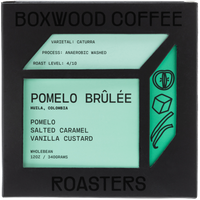
You can taste where all of that time went. A bright, faintly bitter citrus lift on the front, closer to pomelo than grapefruit. Underneath it the long ferment shows up as something rounder, salted caramel settling into vanilla custard on the finish. Clean, structured, and more approachable than "anaerobic" usually suggests.
We roasted it light because there was nothing worth covering up.
We called it Pomelo Brûlée.
Sourcing
This lot came to us through Cafe Imports' Colombian microlot program, which requires a cup score of 87 or higher and full traceability to the producer. Every bag traces back to Daniel and the trees at El Placer.