
Light Roast vs Dark Roast Coffee: What Actually Changes
The real difference between a light roast and a dark roast is how far the bean was taken in the roaster, and that changes three things you can actually taste: acidity, body, and how much of the coffee's origin survives. Light roasts keep the fruit, florals, and bright acidity the farm put there. Dark roasts trade that away for a heavier body and the bittersweet, chocolatey flavours the roast itself creates.
What it does not change, in any way that matters, is caffeine. That myth leads almost every article on this topic and it is wrong in both directions, so it is worth clearing up before anything else. More on that below.
If you already know you want the brighter end of the spectrum, our light roast coffee is where most of Boxwood's single-origin lots live. If you want the comfortable, chocolate-forward end, start with the darker roasts.
What actually changes between light and dark roast
Green coffee is dense, grassy, and undrinkable. Roasting drives off water, expands the bean, and runs a long chain of browning reactions. Where the roaster stops determines everything below.
Acidity drops as the roast goes darker
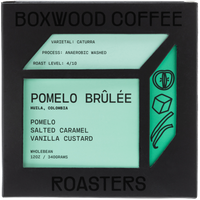
The bright, juicy quality people call acidity comes largely from chlorogenic acids and organic acids in the green bean. Those degrade steadily with heat. A light roast preserves most of them, which is why Pomelo Brûlée, one of our Colombian coffees, from Finca El Placer in Huila, tastes the way its name suggests — pomelo, salted caramel, vanilla custard, with a citrus lift that carries the whole cup. Take that same coffee to a dark roast and the pomelo disappears.
Push into medium-dark and the acid structure flattens deliberately. El Jefe, our medium-dark blend, reads as dark chocolate, sugarcane, and walnut. There is very little perceived acidity, and that is the point — it is the coffee that has been on drip in our cafés for a decade because it is easy to drink all morning.
Body increases, and so does roast flavour
Darker roasts develop more of the heavy, bittersweet compounds that coat the palate. You get a rounder, syrupier cup that stands up to milk. You also get roast-derived flavour — cocoa, toast, molasses — sitting on top of whatever the farm produced. At the far dark end, the roast flavour is essentially all you taste, which is why very dark commodity coffee from three different continents tends to taste the same.
Light roasts have a lighter body and a cleaner finish. They also show off origin work: White Rabbit, a washed Bourbon from Gishamwana Island on Rwanda's Lake Kivu, tastes of toffee, cranberry, and yellow raisin. Those notes are a product of that island, that varietal, and that washing process. A dark roast would erase them. White Rabbit sits in our single-origin coffee range alongside Pomelo Brûlée and Pinàda, a washed Gesha from Peru.
Density and solubility change how you brew
This is the part most comparisons skip, and it is the one that affects your morning. Dark roast beans lose more mass and expand more in the roaster, so they end up less dense and more porous. They are more soluble — flavour comes out of them faster and more easily.
The practical consequence: a dark roast extracts quicker and turns bitter sooner. A light roast is stubborn and needs more help. If you brew both at identical settings, the dark one will taste harsh and the light one will taste sour and thin. See our grind size guide for the two taste symptoms that tell you which mistake you are making.
Caffeine barely moves
Roast level has almost no meaningful effect on caffeine. The molecule is stable at roasting temperatures — it does not burn off. What changes is the bean's density, which means the answer depends entirely on how you measure.
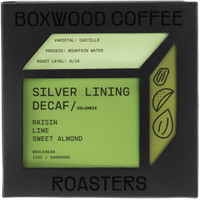
Weigh your coffee on a scale, and light and dark are close to identical, with the dark roast very slightly ahead per gram because it has lost more water. Scoop by volume, and the light roast wins, because denser beans pack more mass into the same spoon. Either way the difference is small enough that it should not drive your buying decision. Choose on flavour and buy decaf if caffeine is the actual concern — our Silver Lining Decaf is decaffeinated by Mountain Water Process, so no chemical solvents are involved.
How to choose between them
Pick a light roast if
- You want to taste where the coffee is from — a specific farm, region, and harvest.
- You brew pour-over, Chemex, or filter and drink it black.
- You like fruit, florals, citrus, and a clean finish.
- You enjoy the fact that the coffee changes every season as lots rotate.
Pick a dark roast if
- You drink coffee with milk, oat milk, or sugar and want it to cut through.
- You want the same reliable cup every single morning.
- You prefer chocolate, nut, and caramel over fruit and acidity.
- You brew French press or an automatic drip machine and do not want to fuss.
Or pick a medium roast and stop agonising
Most people asking this question are happiest in the middle. Hill City, our medium roast blend of Nicaraguan and Guatemalan washed coffees, tastes of pear, grapefruit zest, and honey — enough brightness to be interesting, enough sweetness and body to survive a splash of milk. It is the medium roast we run on drip in the cafés for exactly that reason.
Brewing each one properly
A good starting point for either roast is 1:16 — about 22 grams of coffee to 355 grams of water — with water at 200–205°F. From there, adjust in one direction only:
- Light roast tasting sour or thin? Grind finer, brew hotter, or extend the contact time. You are under-extracting a dense bean.
- Dark roast tasting harsh or ashy? Grind coarser or drop the water temperature a few degrees. You are over-extracting a soluble bean.
Every Boxwood coffee is ground to order at checkout, so you can pick the grind that matches your brewer rather than buying a compromise. The options are Whole Bean, Drip, Pourover/V60, French Press, Espresso, and — on several coffees — Cold Brew. If you want the numbers per brewer, we laid them out in the coffee-to-water ratio chart.
Roast date matters more than roast level
Here is the uncomfortable truth for both camps: a mediocre light roast brewed a week off the roaster will beat a superb dark roast that has been sitting on a shelf for four months. Roast level is a preference. Freshness is a floor.
Every coffee we sell is roasted to order in Westfield, New Jersey. We roast Monday through Thursday, and our core coffees ordered before noon ship the same day. Once it reaches you, store it sealed, cool, dry, and out of the light, and plan to finish a 12oz bag within four to six weeks of the roast date. We go into the full detail — including why the freezer advice you have read is half right — in the coffee storage guide.
Dark roasts stale faster, incidentally. All those surface oils that make a dark bean look glossy are exposed fat, and exposed fat goes rancid. If you buy dark, buy smaller and more often.