
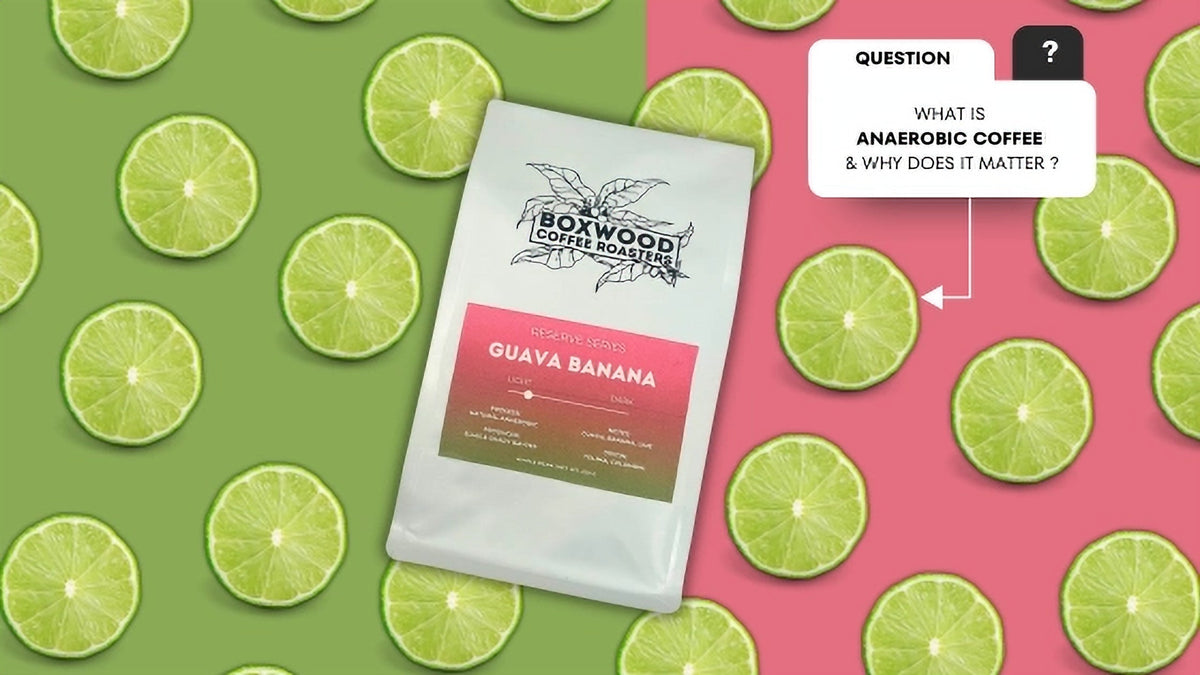
What is Anaerobic Coffee and Why Does It Matter?
Anaerobic coffee is coffee whose fermentation happens in a sealed, oxygen-free tank instead of open air. Shutting out oxygen changes which microbes do the work, and that pushes the cup toward intense fruit, wine-like sweetness and a heavier, syrupy body than a conventionally processed coffee from the same farm.
It matters because processing is the one stage after harvest where a producer can change flavour on purpose. Anaerobic fermentation is the most dramatic version of that lever, which is why it shows up on so many experimental lots.
Most of the anaerobic coffee we roast lives in Boxwood Labs, our small-batch range for experimental processing. Below is how the process works, what it does to the cup, and the real numbers behind the lots on our shelf.
How anaerobic fermentation works
All coffee ferments after picking. Sugars in the fruit and mucilage are eaten by yeasts and bacteria, and the by-products of that feeding season the seed. In a conventional washed or natural process, that happens in open tanks or on drying beds, with oxygen present.
In an anaerobic process the producer loads the coffee into airtight tanks fitted with one-way valves. Carbon dioxide from the fermentation pushes the remaining oxygen out and cannot get back in. Different microbes thrive in that environment, fermentation runs slower and more controllably, and the producer manages time and temperature closely because small changes swing the result a long way.
Anaerobic natural vs anaerobic washed
"Anaerobic" describes the fermentation. The word after it describes how the coffee is finished:
- Anaerobic natural: whole cherries ferment in the sealed tank, then dry with the fruit still on. Expect the most fruit, the most body and the most "wild" character.
- Anaerobic washed: the coffee ferments sealed, then the fruit and mucilage are washed off before drying. Expect the intensity of an anaerobic lot with the cleaner, brighter structure of a washed coffee.
Co-fermentation
Some producers add a second ingredient to the tank, such as sugar cane honey or fruit, so the microbes have more to work with. That is called co-fermentation. It is a step further than a straight anaerobic process, and when a lot has been co-fermented, the process details on its product page say so.
What anaerobic processing does to the cup
- Fruit gets louder. Tropical fruit, red fruit and jammy notes come forward.
- Sweetness reads as dessert. Think caramel, custard or chocolate-covered fruit rather than plain sugar.
- Body gets heavier. Anaerobic naturals in particular can feel syrupy.
- Some lots taste boozy or winey. That is part of the style, and it is why anaerobic coffee divides opinion.
Roast level matters here. We roast these lots light so the processing character survives. A darker roast would cover it with roast flavour, for the reasons we explain in our light roast versus dark roast guide.
The anaerobic coffees we roast now
Guavabanana: anaerobic natural, 48 to 60 hours
Guavabanana comes from El Vergel Estate in Fresno, Tolima, Colombia, where the Bayter family treat processing as an open experiment. Red and Yellow Caturra cherries ferment whole in sealed tanks for 48 to 60 hours, then dry slowly. In the cup: guava, plum and banana over a syrupy body.
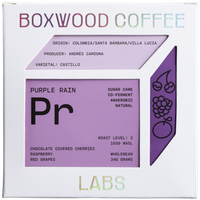
Purple Rain: sugar cane co-ferment, anaerobic natural, 96 hours
Purple Rain is Castillo from Villa Lucía in Santa Barbara, Antioquia, managed by Andrés Cardona. Ripe cherries spend 96 hours sealed in tanks with sugar cane honey before finishing as a natural in mechanical dryers. In the cup: chocolate-covered cherries, raspberry and red grapes.
Pomelo Brûlée: anaerobic washed
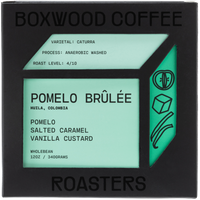
Pomelo Brûlée comes from Finca El Placer in San Agustín, Huila, where Daniel Mauricio Bolaños Zuñiga runs a two-stage fermentation: 48 hours in cherry in containers, then a second 72-hour fermentation with a little water after pulping, before the coffee is washed and dried for 20 to 25 days. The washed finish keeps it bright: pomelo, salted caramel and vanilla custard. It sits in our single-origin coffee range rather than Labs, and it is the gentlest way into the style.
Before these, one of our favourite anaerobic lots was an Ethiopia Gera anaerobic natural that tasted of watermelon, sweet blueberry and red wine. It is no longer on the menu, which is how small experimental lots go.
How to brew anaerobic coffee
Our brewing notes on the Labs coffees are specific, and they differ from our everyday blends:
- Let it rest. These light roasts should rest at least 10 days after roasting. We think they are best at around three weeks.
- Brew a little cooler and a little weaker. We use pour-over at 1:17 with water around 190°F: 20 g of coffee ground medium-coarse to 340 g of water, with a 60 g bloom for 45 seconds.
- Drink it black first. Milk hides exactly what you are paying for.
If the cup tastes sour or thin, grind finer before you change anything else. Our grind size chart covers the symptoms.
Is anaerobic coffee worth it?
If you like fruit-forward, expressive coffee, yes. These lots take more labour, more risk and more control at the farm, and the price reflects it. If you prefer chocolate, nut and a predictable cup every morning, a washed medium roast will make you happier, and there is nothing wrong with that.
Labs coffees are roasted to order Monday through Thursday and ship on Mondays and Fridays.