


Coffee Grind Size: A Chart, and How to Tell If You Got It Wrong
The rule is short: coarse for immersion, fine for pressure, medium for everything in between. French press and cold brew steep for a long time, so they need a coarse grind. Espresso forces water through in under thirty seconds, so it needs a fine one. Drip and pour-over sit in the middle.
And the two taste symptoms that tell you when you got it wrong: sour and thin means too coarse; bitter and drying means too fine. That is the whole diagnostic.
Every bag of Boxwood coffee is ground to order at checkout, so the grind option you pick on the product page is the one that arrives — no compromise setting, no guessing at the store.
The grind size chart
| Grind | Looks like | Brew methods | Boxwood option |
|---|---|---|---|
| Extra coarse | Cracked peppercorns | Cold brew, steeped 12–18 hours | Cold Brew |
| Coarse | Coarse sea salt | French press, percolator | French Press |
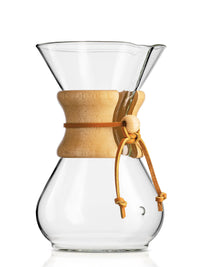
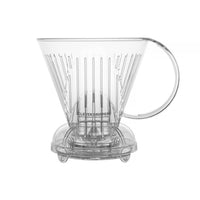
| Medium-coarse | Rough sand | Chemex, Clever Dripper | Pourover/V60 (or Drip for the Clever) |
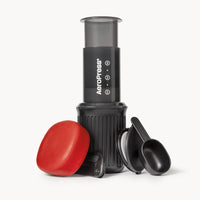
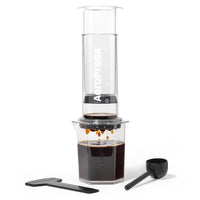
| Medium | Beach sand | Automatic drip, batch brewer, AeroPress | Drip |
| Medium-fine | Fine sand, just gritty | Hario V60, cone pour-over | Pourover/V60 |
| Fine | Table salt, almost powdery | Espresso, moka pot | Espresso |
Not every coffee carries every option — Cold Brew is offered on the blends and coffees we think suit it, and the choice is right there on each product page.
Why grind size changes the taste at all
Brewing is dissolving. Water pulls acids, sugars, and bitter compounds out of ground coffee, roughly in that order: the bright acids come out first, sweetness second, bitterness last.
Grind size controls surface area, and surface area controls speed. Finer grounds expose more coffee to the water, so extraction runs faster. Coarser grounds slow it down. That is why a French press, which sits in water for four minutes, needs a coarse grind to avoid over-extracting — and an espresso shot, which lasts twenty-eight seconds, needs a fine one to get anywhere at all.
Get the pairing wrong and the brew stops in the wrong place: too early and you get the acids without the sugars, too late and you get all the bitterness as well.
How to tell if you got it wrong
Symptoms of too coarse (under-extracted)
- Sour or sharply acidic in an unpleasant, lemon-juice way
- Thin, watery body — it tastes weak even at a strong ratio
- A salty edge, and a finish that vanishes immediately
- Pour-over drains far too fast; espresso gushes and runs pale
Fix: grind finer, one small step at a time.
Symptoms of too fine (over-extracted)
- Bitter, harsh, or ashy
- A drying, chalky feeling on the tongue afterwards
- Hollow in the middle — bitterness without sweetness behind it
- Pour-over stalls and floods the cone; espresso drips slowly and tastes burnt
Fix: grind coarser, one small step at a time.
Change one variable per brew. If you adjust grind and ratio together you learn nothing. Hold the ratio at 1:16 and the water at 200–205°F while you dial the grind in — the ratio chart has the numbers per brewer.
Roast level shifts the target
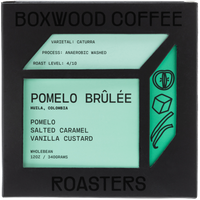
The chart above is a starting point, not a constant. Denser light roasts are harder to extract, so they often want a slightly finer grind than the chart suggests — our Colombian Pomelo Brûlée, a light-roast anaerobic washed lot from Huila, is a good example. Medium-dark roasts like El Jefe are more soluble and give up their flavour readily, so they usually want a touch coarser or they turn bitter.
If you are moving between the two ends of our range regularly, the light roast versus dark roast guide explains what is actually changing in the bean.
Consistency matters more than the setting
A grinder that produces an even particle size will beat an expensive one set perfectly but grinding unevenly. Blade grinders chop rather than mill, producing boulders and dust in the same batch — the dust over-extracts into bitterness while the boulders under-extract into sourness, and you taste both at once. A burr grinder mills to a set gap and gives you one population of particles.
If you want to grind at home, a hand burr grinder is the cheapest genuine upgrade available; we stock one, the Hario Skerton Pro, alongside the brewers in equipment. If you would rather not, ordering ground to order is the next best thing — and it is a good deal better than a bag ground weeks ago at a factory. Whichever you choose, keep it sealed and dark once it arrives; ground coffee stales in days rather than weeks, as the storage guide explains.
All of our coffee is roasted to order in Westfield, New Jersey and ground to the option you pick. We roast Monday through Thursday, and our core coffees ordered before noon ship the same day.